Every month, thousands of people type “almawadahit com usa” into Google. Most of them want a simple answer: what is this site, and is it worth reading? The results they find are a mixed bag of thin explainers, each repeating the same few lines.
This guide goes further. You will learn what Almawadahit Com USA actually is, which topics it covers, what the “USA” in the name does and does not prove, how to judge whether its articles are reliable, and which similarly named sites have nothing to do with it. By the end, you will be able to use the blog smartly instead of guessing. Most competing guides stop at a surface-level description. This one also shows you how to verify what you read, which matters far more than any single review.
Quick Facts
Point | Details |
|---|---|
Site type | Tech blog with articles on AI, software, and digital trends |
Main topics | Artificial intelligence, software and apps, digital marketing, emerging technology |
Language style | Plain, beginner-friendly explanations |
Cost | Free to read, no account needed for basic access |
Audience | Global, with strong search interest from the United States |
Trust note | Homepage traffic claims are first-party and unverified |
What Is Almawadahit Com USA?
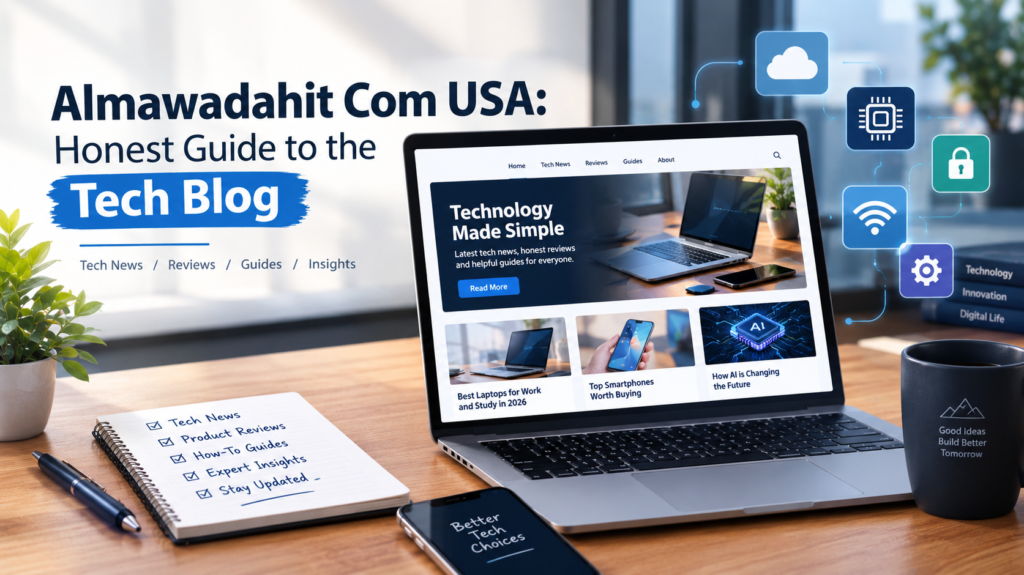
Almawadahit Com USA is a tech-focused blog that publishes articles on artificial intelligence, software, digital marketing, and emerging technology. Its writing aims at clarity over complexity, which makes it approachable for readers without a technical background.
Note that the “USA” in the search phrase reflects where much of the search interest comes from, not necessarily where the site is based. Meanwhile, the content itself addresses global technology topics: AI tools, automation, software guides, and internet trends that matter anywhere.
Think of it as a general-interest tech publication rather than a specialist outlet. It does not break news or publish original research. Instead, it explains topics that are already in the air, in language a beginner can follow. For students, freelancers, and small business owners trying to keep up with digital change, that format has obvious appeal.
Topics the Blog Covers
Topic | What readers find | Best for |
|---|---|---|
Artificial intelligence | AI tools, automation basics, machine learning explainers | Students, curious professionals |
Software and apps | App overviews, updates, productivity and workflow tips | Everyday users |
Digital marketing | SEO basics, branding, content strategy | Marketers, small business owners |
Emerging technology | Cloud computing, cybersecurity, IoT, future trends | Tech enthusiasts |
AI gets the most attention, which mirrors the wider internet. Articles tend to focus on practical questions: what a tool does, where it saves time, and how a small team might use it. Software coverage leans toward comparisons and how-to guidance rather than deep technical reviews. Marketing content stays at the beginner level, covering fundamentals like search optimization and content planning.
These four areas overlap more than they appear to. AI articles often touch on marketing automation, while software guides regularly mention cloud tools. That overlap is actually helpful, because real digital work rarely stays inside one category. A freelancer might start with an AI writing tool, then need the marketing piece to promote the content, then the software guide to manage it all. Blogs that mirror this messiness, instead of forcing rigid walls between topics, tend to be more useful in practice.
What Does the USA in the Name Actually Mean?
This is the question most guides dodge, so let us answer it directly. The word “USA” in the search phrase does not prove the website is a US-registered company, and it does not confirm a physical office in the United States. It tells you where search demand concentrates, nothing more.
That distinction matters because readers often assume a country label implies accountability: a real company, a real address, a real editorial team. With small independent blogs, those assumptions need checking, not guessing. If knowing the operator matters to you, look for an about page with named people, a contact address, and a privacy policy. Their presence or absence tells you more than any country label.
The content itself reads as globally aimed. Nothing in the topic mix is US-specific, and the audience guidance from existing reviews points to students, developers, and business owners everywhere.
Search behavior explains the label better than geography does. When thousands of US-based readers look up the same site, search engines associate the domain with the country, and later writers repeat the pairing until it looks official. It is a feedback loop, not a fact. Keep that in mind whenever a country tag appears in a blog’s nickname rather than its legal pages.
How to Judge Whether Its Articles Are Reliable
Here is the genuinely useful part. Instead of trusting or dismissing the whole blog, evaluate article by article. Professional researchers use versions of this checklist daily. It takes less than a minute per article once it becomes habit, and it protects you from the most common failure modes of small blogs: outdated advice, missing sources, and confident claims built on thin air. This five-point check works for any small tech publication:
- Look for a named author. Articles signed by a real person with a track record beat anonymous posts every time.
- Check the publication date. Tech advice decays fast. A 2022 software guide may describe buttons that no longer exist.
- Follow the sources. Reliable pieces link to primary sources: official documentation, vendor announcements, or established outlets. Claims floating without links deserve skepticism.
- Cross-check important claims. Before acting on anything involving money, security, or business decisions, confirm it against a second reputable source.
- Watch for correction signals. Blogs that fix mistakes and date their updates take accuracy seriously. Blogs that never acknowledge errors do not.
Apply this to any tech blog, not just this one, and your reading diet will improve immediately.
Green Flags vs Red Flags
Green flags | Red flags |
|---|---|
Named authors with visible expertise | Anonymous articles with no byline |
Dated articles with update history | Undated content on fast-changing topics |
Links to primary sources | Big claims with no citations |
Clear correction policy | Traffic and reader claims with no methodology |
Focused, consistent topic coverage | Sudden pivots into unrelated niches |
Do Not Confuse It With These Similar Names
Several similarly named domains float around, and they are not the same site. Mixing them up leads to wrong conclusions about who runs what.
Domain | What it appears to be | Relation to the tech blog |
|---|---|---|
almawadahittech.com | Tech services and AI trend content | Similar name, separate domain, shared ownership unconfirmed |
almawadahit.org | Multi-topic blog with software and tech posts | Similar name, separate domain, shared ownership unconfirmed |
almawadahit.ae | Online pharmacy content | Different entity entirely, unrelated subject matter |
The takeaway is simple. A similar name is not evidence of a shared owner. Judge each domain on its own content, authorship, and transparency.
How It Compares to Bigger Tech Publications
To use the blog well, it helps to know where it sits in the wider landscape.
Aspect | Almawadahit-style blogs | Major tech outlets | Niche specialist blogs |
|---|---|---|---|
Depth | Beginner overviews | News plus analysis | Deep expert dives |
Speed | Evergreen explainers | Breaking news | Slow, detailed guides |
Best use | Learning the basics | Following the industry | Mastering one topic |
Author visibility | Often limited | Named journalists | Known experts |
Neither type replaces the other. Start with a plain-language explainer to grasp a topic, then move to specialist sources when you need depth. For example, read a beginner piece on how AI chatbots work here, then check official documentation or a respected AI publication before building anything serious. This ladder approach, simple overview first and authoritative source second, is how smart readers handle all small blogs.
Who Should Read It, and Who Should Skip It
This blog fits you if you are a student building foundational tech knowledge, a freelancer keeping up with AI tools, or a small business owner exploring automation and digital marketing basics. The plain-language style will save you time when you need a quick orientation on an unfamiliar topic. Career switchers eyeing tech roles will find the jargon-free explainers a gentle entry point. Parents helping kids build digital literacy can also use the plain-language pieces as shared reading material.
Skip it as a primary source if you make high-stakes decisions. Cybersecurity setups, financial choices, and business-critical software picks deserve confirmation from established outlets, official documentation, or qualified professionals. Use the blog as a starting point for learning, then verify before you act.
Getting the Most Out of the Blog
A few habits turn casual browsing into real learning:
- Use the site search first. With a broad archive, searching beats scrolling through categories.
- Check the date before trusting details. A post from two years ago may describe tools or prices that have changed completely.
- Read across topics. An AI article plus a digital marketing piece can spark ideas neither gives alone, like using automation in a content workflow.
- Bookmark what holds up. When an article proves accurate over time, save it. Your personal collection of verified pieces becomes more valuable than any single site.
- Pair it with one authoritative source. Follow a single respected outlet alongside the blog, and compare coverage whenever a claim matters.
Frequently Asked Questions
What is Almawadahit Com USA?
It is a tech blog publishing beginner-friendly articles on AI, software, digital marketing, and emerging technology. The “USA” reflects strong American search interest rather than confirmed US ownership.
Is it only for US readers?
No. The topics are global, and the writing targets anyone trying to understand modern technology, regardless of location.
Is it good for beginners?
Yes. Plain language is the blog’s main strength. Readers without a technical background can follow most articles without trouble.
Is it the same as the other Almawadahit domains?
Not necessarily. Similarly named domains exist, but shared ownership should not be assumed. Each site should be judged on its own.
Can I trust its articles?
Treat it as a starting point, not a final authority. Check the author, date, and sources on each article, and confirm important claims elsewhere before acting on them.
Does the site cost anything to use?
No. The content is free to read, and basic access does not require an account.
How often is it updated?
Update frequency varies by topic. Always check the date stamp on the article you are reading, since tech content ages quickly.
Should I rely on it before buying software?
Use it for orientation, then confirm with official documentation, trial versions, or established review outlets before spending money.
Final Verdict
Almawadahit Com USA is best understood as a free, beginner-friendly tech blog with a practical focus. Its value lies in plain explanations of AI, software, and digital trends, not in breaking news or deep analysis. The honest caveats are equally clear: traffic claims are unverified, the “USA” label proves nothing about ownership, and similarly named domains are separate entities.
Used wisely, it earns a place on a beginner’s reading list. Read critically, verify what matters, and let it be the start of your research rather than the end of it. Pair it with the reliability checklist above, and you will get the benefits without the risks.
If this guide helped you see the site clearly, share it with someone else who keeps bumping into the name in search results. Clear answers beat vague explainers every time.
You may also Like: HRMS Globex: The Complete Guide to Features, Login and Employee Portal