
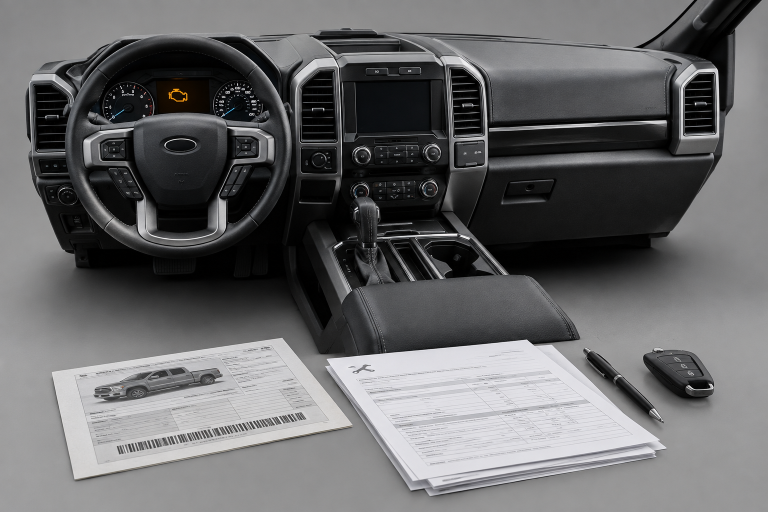
Repeated repair visits can turn a dependable pickup into a daily source of stress. Whether you are dealing with warning lights, rough shifting, electrical problems, a steering concern, or long waits for parts, a clear process can help you protect your safety, your time, and your records. Owners researching Chevy Silverado issues often face the same challenge: a symptom may disappear temporarily after service, only to return days or weeks later.
The goal is not to diagnose the truck yourself or assume every repair proves a defect. Instead, document what happens, communicate clearly with the service department, and recognize when a recurring issue deserves closer attention. A calm, organized approach provides the technician with better information and creates a useful timeline if the problem persists.
Why Vehicle Problems Keep Returning
A repair visit may resolve an immediate symptom without identifying the underlying cause. For example, a technician may replace a component that tested outside its expected range, while an intermittent wiring connection, software condition, or related part continues to trigger the same warning. Some problems also occur only under certain conditions, such as while towing, after a cold start, at highway speed, during heavy rain, or after the truck has been driven for an extended period. That does not necessarily mean the shop ignored the concern. Intermittent issues can be difficult to reproduce in a service bay. Still, a recurring symptom is different from ordinary maintenance or an unrelated one-time repair. When the same behavior recurs, treat each visit as part of a single ongoing record rather than as a completely separate event.
Warning Signs To Watch
A small concern may warrant more attention when it recurs or affects how the vehicle operates. Pay attention to patterns rather than waiting for a problem to become severe.
- The same dashboard warning appears after a recent repair.
- The truck hesitates, loses power, shifts harshly, pulls while braking, or behaves differently during steering.
- The service department repeatedly states that it could not duplicate the concern.
- The repair order uses a vague description that does not match what you reported.
- The vehicle remains at the shop for several days without a clear explanation.
- The issue occurs under identifiable conditions, such as a specific speed, temperature, load, or road surface.
How To Check For Open Recalls
Do not rely only on broad model-year search results when checking for a recall. Use the truck’s 17-character vehicle identification number (VIN), as it identifies the specific vehicle. The official recall lookup tool can help owners check for unrepaired safety recalls and review related safety information.
- Locate the VIN on the lower corner of the dashboard, registration, or insurance documentation.
- Search the VIN and read any recall notice carefully.
- Follow the listed safety guidance, especially if the notice advises limited driving or prompt repair.
- Schedule the repair with an authorized dealer.
- Save the final repair paperwork after the recall remedy is completed.
A clean recall search does not prove that a reported problem is unimportant. It simply means no unrepaired recall appears for that VIN at the time of the search.
How To Build A Repair File
A complete repair file turns a frustrating series of visits into a clear timeline. Create one digital folder, paper folder, or both, and add documents immediately after each interaction.
Documents To Save
- Purchase or lease documents and written warranty materials.
- Every repair order, invoice, inspection report, and parts receipt.
- Photos or videos that safely show warning lights, leaks, messages, or unusual sounds.
- Towing, rental vehicle, rideshare, and other transportation receipts.
- Emails, text messages, and notes from phone calls with the dealer or manufacturer.
Details To Record
- The date, mileage, and driving conditions when the issue occurred.
- A plain-language description of what the truck did.
- The dates the truck entered and left the shop.
- The diagnosis, tests, repairs, and parts listed by the service department.
- The date and mileage when the symptom returned, if it did.
How To Work With the Service Department
Clear communication can improve both the repair record and the technician’s ability to reproduce the concern. Describe what you observed rather than insisting that a particular part must be defective. For instance, “the steering becomes unusually heavy after driving for 30 minutes” is more useful than guessing at a failed component.
- Explain when the issue happens, how often it occurs, and whether conditions seem to trigger it.
- Ask the advisor to write your concern accurately on the repair order.
- Read the repair order before leaving and request a copy.
- Ask what testing was performed and what the results showed.
- Follow up in writing if the same symptom returns after the repair.
When the Problem Becomes a Safety Concern
Some recurring concerns are inconvenient. Others can affect safe operation. Do not continue driving when the truck has a condition that creates an immediate risk, particularly unexpected braking, reduced braking performance, difficult or loose steering, smoke, overheating, loss of power in traffic, or an electrical failure affecting lights or restraint systems. Follow any manufacturer safety instructions and contact the dealer or roadside assistance provider when appropriate. If driving the truck could put you or others at risk, arranging a tow may be the safer choice.
Warranty and Service Contract Questions
Coverage depends on the written terms, mileage, time in service, vehicle history, and type of repair involved. A manufacturer’s warranty and a separately purchased service contract are not necessarily the same thing. The Federal Trade Commission explains that auto warranties and service contracts can have different coverage terms, exclusions, repair-location requirements, and approval procedures. Before authorizing work, ask whether the concern is covered, whether prior approval is required, whether there is a deductible, and whether the vehicle must be repaired at a specific facility. Keep maintenance receipts as well, since they may help establish that the truck was maintained in accordance with applicable requirements.
What To Do About Long Repair Delays
Track time out of service in addition to the number of repair attempts. Record the drop-off date, promised completion date, updated estimate, and pickup date. If the delay involves parts, diagnosis, or authorization, ask for the reason in writing. Keep receipts for alternate transportation and save every update from the service department.
Mistakes To Avoid
- Discarding repair orders because the visit did not result in a repair.
- Waiting too long to report a recurring problem.
- Accepting a description on the invoice that does not reflect the actual complaint.
- Assuming a “could not duplicate” result means the visit has no value.
- Ignoring a warning because the truck still starts and drives.
- Signing a release or settlement without reviewing its terms carefully.
Common Questions From Pickup Owners
How many repair attempts are too many?
There is no universal number. The seriousness of the issue, repair history, time out of service, warranty status, and applicable state law can all matter.
What if the dealer cannot find the problem?
Keep the repair order, document the conditions under which the symptom occurred, and return promptly if it happens again. A record showing that the concern was reported can still be important.
Can a used pickup still have coverage?
Possibly. Coverage may come from a remaining manufacturer’s warranty, a certified pre-owned program, a service contract, or state consumer protection rules. Review the actual documents before making assumptions.
Final Takeaway
A pickup that repeatedly returns to the shop deserves careful attention, especially when the same problem continues after previous repair attempts. Check for open recalls using the vehicle’s VIN, report symptoms promptly, and keep all repair orders, invoices, diagnostic reports, photographs, and written communications related to the issue. Track the dates the pickup is unavailable, along with towing, rental, or other reasonable expenses connected to repeated repairs. Make sure each repair order accurately reflects the concern you reported, including warning lights, unusual noises, loss of power, braking issues, or other symptoms. If the problem is intermittent, record when and under what conditions it occurs, provided it is safe to do so. A well-organized record cannot repair the truck on its own, but it can make conversations with a dealer, manufacturer, agency, repair professional, or qualified adviser far more productive. Clear documentation can also help you recognize patterns, evaluate whether repairs are resolving the underlying issue, and make a more informed decision about what to do next.
You may also Like: Top 10 HR Outsourcing Companies For Growing Businesses
Pingback: Leonardo DiCaprio and Emma Walmsley: Real Link or Myth?